Part 4 · Culture & Identity
Festivals, Folklore & Foodways
Emery County's participatory culture - the festivals, foodways, and folk arts that knit a population of fewer than 10,000 across 7,000 square miles. This chapter walks the county calendar from the Pioneer Day rodeo cluster (Castle Dale's RMPRA-sanctioned Cowboys Memorial Rodeo, Huntington Heritage Days, Emery, Orangeville) through Ferron Peach Days (1906) and Green River Melon Days (1906), the Emery County Fair, and the Castle Valley Pageant (since 1978); surveys layered foodways of pioneer Mormon dryfarming, coal-camp Welsh-Cornish-Greek-Italian-Slavic kitchens, and modern ranching tables; and closes with cowboy-poetry, fiddling, choral, quilting, and storytelling traditions.
Ch27 — Festivals, Folklore & Foodways
27.1 The County Calendar: Festivals as Cultural Backbone
In a county of fewer than ten thousand residents spread across seven thousand square miles of high desert, the festival calendar is more than a list of events; it is the connective tissue of community life. Where Chapter 26 traces the formal arts and letters of Emery County — its writers, its newspapers, its museum circuit — Chapter 27 attends to participatory culture: the parades, rodeos, harvest festivals, kitchens, and informal storytelling that residents make together year after year.
Castle Valley’s calendar runs in three main seasons. Summer, from mid-June through mid-September, brings the rodeos, parades, and harvest festivals that draw crowds back from out-migration cities and pull tourists in off Interstate 70. Autumn — the fall hunt, the school-year sports cycle, the harvest church suppers — anchors the agricultural year. Winter and early spring are quieter, governed by religious holidays, school programming, and the indoor work of quilting circles, family-history binders, and food-storage pantries. Every season has its rituals; together they describe a place where memory and present life are still tightly knit.
This chapter follows that arc. It begins with the headline summer events — Pioneer Day, the harvest festivals, the Emery County Fair, the Castle Valley Pageant — then turns to the foodways that have layered onto the county over a century and a half: pioneer Mormon foundations, coal-camp ethnic inheritance, ranching and hunting traditions, and the modern table. It closes with the folk arts and storytelling traditions that surround every festival and pantry, and a frank assessment of what continuity will require as the county’s demographics shift through the 2020s and beyond.
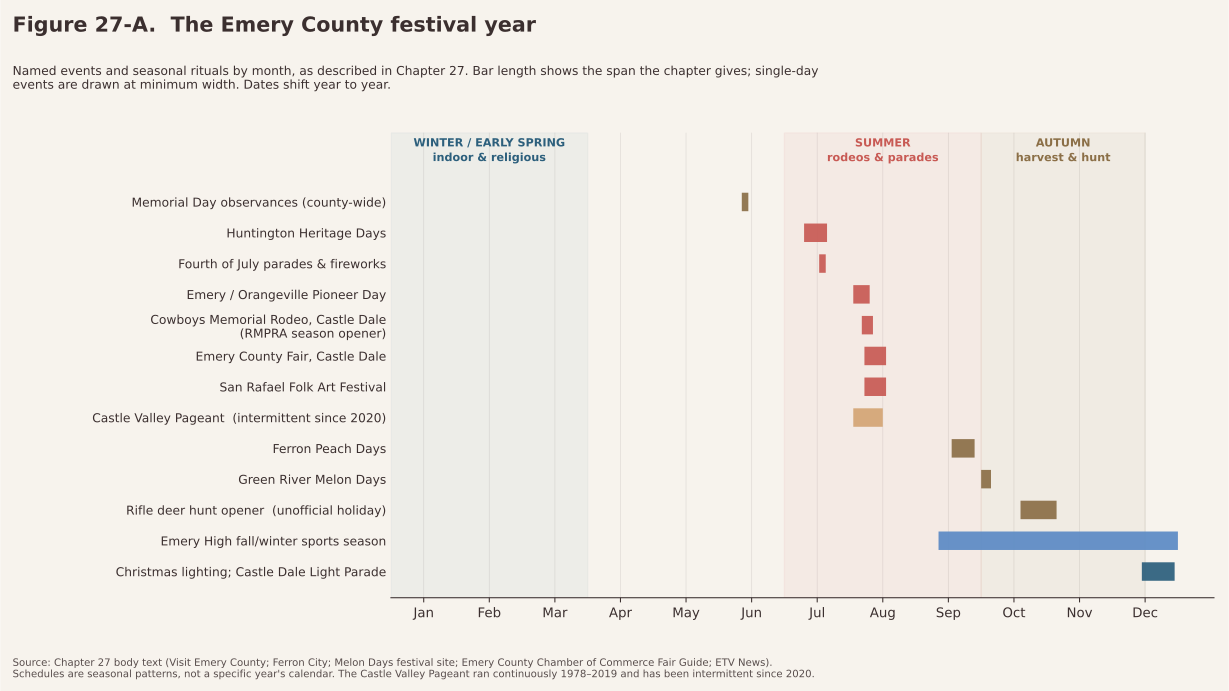
Table 27-A — Emery County festival calendar
| Festival | Town | Season | Founding | Signature programming |
|---|---|---|---|---|
| Cowboys Memorial Rodeo | Castle Dale | Pioneer Day weekend (late July) | not stated | RMPRA season opener; bull riding, saddle bronc, team roping, barrel racing, steer wrestling; free Saturday concert |
| Huntington Heritage Days | Huntington | late June – July 4 | not stated | Rodeo with hide races; community breakfast; 10 a.m. Main Street parade; lawn-mower races; fireworks |
| Emery Pioneer Day | Emery | July | not stated | Annual theme; softball tournament; ATV/UTV poker ride; 5k; drive-in movie |
| Orangeville Pioneer Day | Orangeville | July | not stated | Ward-coordinated family events at the city park |
| Ferron Peach Days | Ferron | Tuesday after Labor Day → following weekend | contested: 1901 or 1906 | Fun run and bicycle ride; peach dessert contest; community dinner; parade; fireworks |
| Green River Melon Days | Green River | third weekend of September | 1906 | 20-ft wooden watermelon-slice float (built 1960); car show; rodeo; 5k; farmers market |
| Emery County Fair | Castle Dale Fairgrounds | fourth or fifth week of July | before 1920 (undocumented) | Youth livestock show and auction; vendor midway; demolition derby; parade; concerts |
| San Rafael Folk Art Festival | Museum of the San Rafael, Castle Dale | alongside the Fair | not stated | Atlatl demonstrations; mountain-man encampment; Scottish heritage display; cowboy poetry; blacksmithing, leatherwork, weaving |
| Castle Valley Pageant | amphitheater 7 mi N of Castle Dale | summer | 1978 | Outdoor pioneer pageant; wagon teams, livestock, hillside dugouts. Continuous 1978–2019; intermittent since 2020; 36th iteration 2023 |
Source: Chapter 27 §§27.2–27.6. A founding entry of ‘not stated’ means the chapter gives no founding year; it is not an assertion that none exists.
27.2 Pioneer Day Across the Towns
July 24 is the most consequential date on Emery County’s annual calendar. Pioneer Day commemorates the 1847 arrival of Brigham Young and the first company of Mormon pioneers in the Salt Lake Valley, and by extension it marks the 1877 directive that sent fifty Sanpete Valley families east over the Wasatch Plateau to settle Castle Valley. Each major Emery County town stages its own variant; together they form a county-wide cluster of celebration that spans late June into the first week of August.
The signature event is the Cowboys Memorial Rodeo in Castle Dale. Sanctioned by the Rocky Mountain Pro Rodeo Association (RMPRA), the rodeo serves as the season opener for that circuit, which encompasses roughly forty rodeos across Idaho, Utah, Nevada, and Wyoming. Performances begin nightly at 7:30 p.m. across Pioneer Day weekend; a free concert closes the rodeo on Saturday night. Bull riding, saddle bronc, team roping, barrel racing, and steer wrestling fill the program, and contestants who post strong rides at Castle Dale begin their accumulation toward the RMPRA Finals each November. For local audiences, the rodeo is the centerpiece of summer; for the broader regional circuit, it sets the year’s narrative.
Huntington Heritage Days runs from late June through July 4, slightly earlier than the Castle Dale celebration but with similar elements. The annual rodeo, held at the Huntington rodeo grounds, features hide races and other traditional events alongside the standard rough-stock and timed-event lineup. Heritage Days morning programming includes a community breakfast in the city park (7:30 to 9:00 a.m.), a 10:00 a.m. parade down Main Street, free children’s rides, and live entertainment in the park. The afternoon brings a volleyball tournament; the evening, lawn-mower races at the Junior High School football field. The celebration concludes with a fireworks display launched from the rodeo grounds.
The town of Emery stages its own Pioneer Day, often built around a yearly theme — “Together We Shine” was used recently — and centered on softball tournaments, an ATV/UTV poker ride, a 5k run, and a drive-in movie. Orangeville programs smaller-scale family events, often coordinated through LDS ward auxiliaries and the city park. Ferron folds Pioneer Day into a longer summer arc that culminates in Peach Days each September.
Across all of these, Pioneer Day functions less as a single holiday than as a regional festival belt. The same families circulate among Castle Dale’s rodeo, Huntington’s parade, and Emery’s softball tournament across two weekends, and the same volunteer corps — fair-board members, rodeo committees, ward Relief Societies — sustains the programming year over year.
Table 27-B — Pioneer Day programming by town
| Town | Timing | Programming named in §27.2 |
|---|---|---|
| Castle Dale | Pioneer Day weekend | Cowboys Memorial Rodeo (RMPRA season opener), nightly 7:30 p.m.; free closing concert Saturday |
| Huntington | late June – July 4 | Rodeo (hide races); 7:30–9:00 a.m. park breakfast; 10 a.m. parade; free children’s rides; live entertainment; afternoon volleyball; evening lawn-mower races; fireworks |
| Emery | July | Themed celebration (‘Together We Shine’); softball tournament; ATV/UTV poker ride; 5k; drive-in movie |
| Orangeville | July | Smaller-scale family events via LDS ward auxiliaries and the city park |
| Ferron | July → September | Pioneer Day folded into a longer summer arc culminating in Peach Days |
Source: Chapter 27 §27.2.
27.3 Ferron Peach Days: Utah’s Oldest Continuous Celebration
In the early 1900s, John C. Lemon planted approximately 2,500 peach trees in Ferron’s Molen and Mayfield bench. The Lemon orchard variety — small, intensely flavored, with a deep red blush — earned Ferron a reputation across the Wasatch Front for exceptional fruit. In 1906, the town inaugurated Peach Days to celebrate the harvest, and the festival has run every September since.
Ferron Peach Days is widely described as the oldest continuous celebration in the state of Utah, a claim the city has carried on its civic letterhead for decades. The principal competing claim comes from Brigham City’s Peach Days in Box Elder County, which began in 1904 but had a discontinuous early history; Ferron’s continuity through the Depression, World War II, and the coal-economy contraction of the 1980s and 1990s is part of the case for its title. The exact priority remains a matter of friendly local debate.
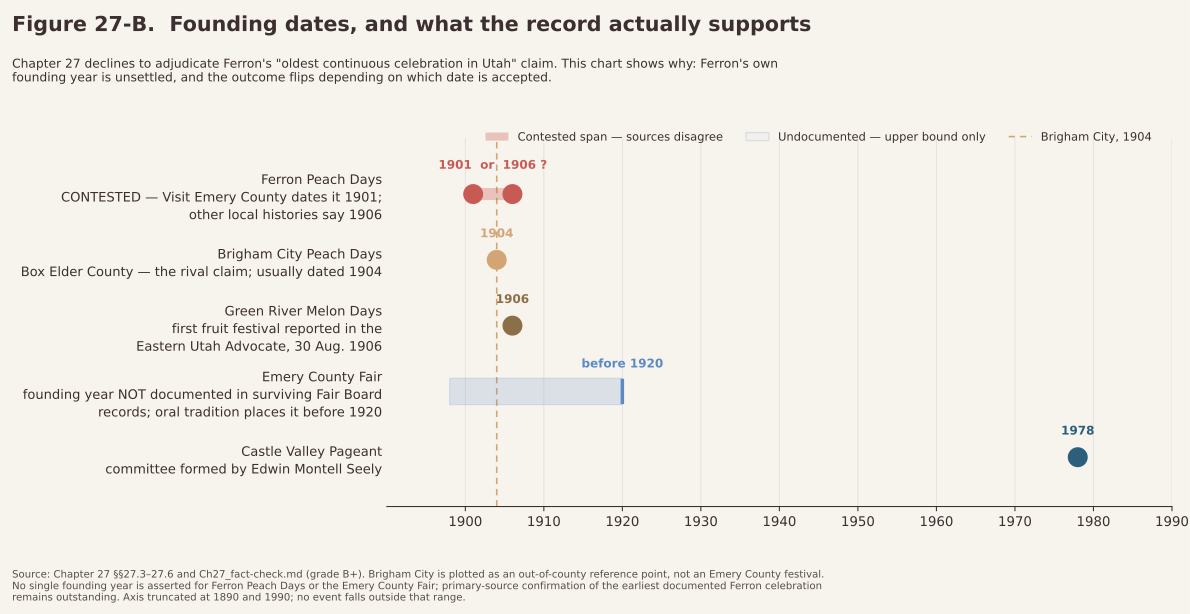
The festival opens on the Tuesday after Labor Day — keyed to prime peach season — and runs through the following weekend. The schedule is built from elements that have changed remarkably little over a century: a fun run and bicycle ride, a dessert contest dominated by peach-based entries, a community dinner, a parade through downtown Ferron, fireworks, and adjacent agricultural programming including the Southeastern Utah Junior Livestock Show (held earlier in the summer at the same fairgrounds).
Beneath the surface of the celebration sits a longer story. The Ferron orchards declined after Lemon’s generation; competition from Brigham City and Salt Lake County peaches, irrigation-water shortages, and a 21st-century real-estate transition have reduced the active orchard acreage to a fraction of its early-20th-century peak. Peach Days persists in part because the festival itself — not the commercial harvest — is now the principal vehicle for preserving the tradition. A handful of Lemon-variety trees remain in production, and a revival movement among younger Ferron residents has begun to replant in recent years.
27.4 Green River Melon Days
A hundred miles east of Ferron, on the Green River side of the county, a different harvest festival traces its origins to the same year. The first Green River fruit festival was reported in the Eastern Utah Advocate of August 30, 1906, which described the town’s celebration as drawing “large crowds.” Settlers had been planting melons there since the 1890s, but peaches were Green River’s first agricultural calling card. A deep freeze in the winter of 1919 killed most of the peach trees, and surviving farmers — including the entrepreneur J. H. “Melon” Brown — pivoted to cantaloupes and watermelons. The festival’s name and identity followed the crops.
Today Green River Melon Days runs the third weekend of September and is widely cited as 110 years old or more (in 2022 the Moab Sun News counted 116 years, dating from the 1906 founding). The signature image of the parade is a 20-foot-long, 10-foot-tall wooden watermelon slice, originally constructed in 1960 and still pulled by a John Deere tractor at the head of the procession, traditionally led by Green River’s major melon-growing families. Early gatherings featured baseball games, cantaloupe feasts, and porch concerts at the old Palmer House Hotel; modern programming layers in a car show, a rodeo, vendor booths, a 5k, and a farmers market.
Green River straddles the Emery–Grand county line, and Melon Days draws as much from Grand County tourism (Moab is fifty miles south) as from Emery County agricultural identity. The festival is hosted on the Emery side, and the melon-growing families whose names anchor the parade — the Dunhams, the Vetere family, the more recent generations of growers along the river bottoms — are central to Emery County’s eastern-corridor culture. (See Ch20: Agriculture & Ranching ↗ 3 Ch20: Agriculture & Ranching Pioneer canal-building and cooperative irrigation, the salinization crisis, the federal Emery County Project's dams and ... Read chapter → for the agricultural and irrigation backstory.)
27.5 The Emery County Fair and the San Rafael Folk Art Festival
If Pioneer Day is the busiest week of the calendar, the Emery County Fair runs a close second. Held at the Emery County Fairgrounds in Castle Dale, organized by the Emery County Fair Board, and traditionally programmed across the fourth or fifth week of July, the fair has been the county’s main agricultural showcase since the early 20th century. (The exact founding year is not well documented in surviving Fair Board records; oral tradition places it before 1920, contemporaneous with the Fairgrounds’ establishment.) A Civilian Conservation Corps camp located just south of Main Street, near the present fairgrounds, contributed Depression-era construction labor that shaped the modern site.
Fair programming is broad. Vendor booths line the midway with crafters, artists, boutiques, western goods, and food trucks. A youth livestock show — sheep, swine, dairy and beef cattle, rabbits, poultry — runs through the week; the auction at week’s end is a fundraising backbone for 4-H and FFA programs across Castle Valley. A demolition derby, parade, and concerts fill the evening calendar, and the Cowboys Memorial Rodeo (described above) overlaps with the late-July fair window.
Held alongside the fair at the Museum of the San Rafael complex, the San Rafael Folk Art Festival is the county’s most distinctive cultural event. The festival’s programming is unusually layered, drawing from each of the cultural traditions that has shaped Emery County: atlatl throwing demonstrations (the spear-thrower technology used by Fremont and pre-Fremont peoples — see Ch09: Fremont Culture ↗ 2 Ch09: Fremont Culture The most visible ancient culture in Emery County: Fremont pit houses, pottery, irrigation, and the spectacular rock art ... Read chapter → ), mountain-man encampments and trapper-era reenactments, a Scottish heritage display reflecting the county’s coal-camp inheritance, cowboy poetry readings, and traditional crafts including blacksmithing, leatherwork, and frontier weaving. The festival is intentionally multicultural in a way that few rural-Utah events are — a single afternoon can move from a Ute storyteller’s program to a Welsh choral demonstration to a Dutch-oven cookoff. Year-by-year programming continuity is not well documented in surviving records, a gap that future oral-history work may fill.
27.6 The Castle Valley Pageant
In 1978, Edwin Montell Seely — a sixth-generation descendant of the Castle Valley settlers, born 1934 in Castle Dale, the eventual author of an extensive 1981 Emery County History and several Seeley-family genealogies — formed a committee to produce a pageant telling the story of the 1877 pioneers. He scouted an outdoor amphitheater carved from a hillside seven miles north of Castle Dale and wrote the script himself, though, by his own account, he never considered himself a writer. The first Castle Valley Pageant was performed that summer.
The pageant’s setting is rustic by design. Tents, tumbleweeds, and dugouts carved into the hillside frame a stage where local volunteers reenact the journey of the Sanpete-Valley families directed by Brigham Young — in what was reportedly his last colonization order before his death in August 1877 — to settle Huntington, Ferron, Castle Dale, and Orangeville. Wagon teams, livestock, and period costumes drawn from family attics give the production a documentary texture rare in church-pageant traditions.
For three decades Seely shepherded the pageant, expanding the cast, adding scenes, and writing the Castle Valley Pageant History in 2003. He died on August 12, 2008, while leading a handcart re-enactment expedition in Fairview Canyon — a death his family and community read as fitting (see Ch28: Notable People & Oral Histories ↗ 4 Ch28: Notable People & Oral Histories A representative gallery of Emery County's people from 1877 to the present: Indigenous voices, founding pioneers (Orange... Read chapter → ). His widow continued his pageant work after his passing.
The Castle Valley Pageant has run on a mix of annual and biennial schedules; the 36th iteration was performed in 2023, indicating both the depth of its tradition and the periodic adjustment to a biennial cadence in recent decades. Volunteer-cast turnover, weather risk at the open-air amphitheater, and competing summer programming all shape the schedule. The pageant remains one of the largest volunteer cultural projects in southeastern Utah and is the most direct living connection between modern Emery County and the 1877 settlement story chronicled in Chapter 16.
27.7 Pioneer Mormon Foodways
The first foodways layer in Emery County is the pioneer Mormon table that arrived with the 1877 settlement. Its principal organizing influence was the Word of Wisdom, the dietary code drawn from an 1833 revelation that took on increasingly formal expression through the late 19th century: avoidance of coffee, tea, alcohol, and tobacco, and emphasis on grains, fruits, vegetables, and moderation in meat. By the time Castle Valley was settled, these practices were a defining feature of Mormon community life.
The kitchen technology of the pioneer era was shaped by the Dutch oven: a cast-iron lidded pot that traveled west on every wagon and earned a place among the essential homestead implements. Dutch ovens were used for breads, cakes, roasts, soups, and stews; for sterilizing water; and even for transporting hot coals between campsites on the trail. In Castle Valley, where wood was scarce in the lower benches and coal was abundant, the Dutch oven adapted readily to coal-fired hearths. The instrument remains a distinctive Utah-Mormon culinary marker; modern Dutch-oven cookoffs are a fixture at Pioneer Day events across the state, and Emery County’s Fairgrounds and rodeo grounds host them annually.
Pioneer staples in Castle Valley reflected the region’s hard environment. Dryfarmed wheat, irrigated alfalfa-fed beef and mutton, garden vegetables, and orchard fruit (peaches, apples, apricots, pears) anchored the diet once water systems were operational (see Chapters 19 and 20). Earlier subsistence drew on rabbit, fish from the Price and San Rafael rivers, and gathered wild foods — chokecherry, serviceberry, currant, buffaloberry, and pine nut. The first Salt Lake Valley pioneer crop in 1847 had been potatoes, followed by buckwheat, corn, oats, turnips, and beans; Castle Valley’s pioneer gardens followed the same template a generation later.
A few specific foodways have survived as Emery County markers. Scones — the Utah-Mormon term for a deep-fried dough served with honey or jam — are a Pioneer Day staple at every town breakfast. Funeral potatoes (cubed potatoes baked with cheese, sour cream, and a cornflake crust) appear at every ward dinner and family gathering. Home-canned peaches and apricots, especially Lemon-variety Ferron peaches, are a marker of family pantries. Brock Cheney’s Plain but Wholesome and Edison, Eliason, and McNeill’s This Is the Plate both situate these dishes in the broader Utah foodways tradition; their Emery County variants are part of a recognizable regional vocabulary.
27.8 Coal-Camp Ethnic Layering
The second major foodways layer arrived with the coal economy. Beginning in the 1880s and accelerating after 1900, the coal mines of the Wasatch Plateau drew workers from across Europe and, in smaller numbers, Asia. Cleveland’s early population — reflective of the broader pattern — included Sanpete Danes, English, Welsh, and Scottish coal miners who came over the ridge from Scofield, plus Icelanders from Spanish Fork. The wider Carbon–Emery coal field absorbed thousands of European immigrants between 1890 and 1921: Greeks, Italians, Slavs, Welsh, Cornish, and — in lesser numbers — Japanese and Chinese workers (see Ch17: Coal, Copper & Uranium ↗ 3 Ch17: Coal, Copper & Uranium The extractive century: coal seams of the Wasatch Plateau, uranium-rich sandstones of the San Rafael Swell, copper bypro... Read chapter → for the labor and industrial history).
Foodways were among the most durable inheritances of these communities, often persisting long after traditional dress, architecture, and farming methods had been Americanized. Welsh Sunday lamb dinners, Italian sausage curing and bread baking, Greek lamb roasts and phyllo pastries, Slavic cabbage rolls and pickled vegetables, Cornish pasties (the miner’s lunch par excellence) — all of these layered onto the Mormon pioneer baseline and altered it. Immigrant women taught American cooking even as they preserved heritage dishes; a typical immigrant table could move from explicitly ethnic foods to the regionally ubiquitous open-faced roast-beef sandwich with brown gravy that became a coal-camp standard.
Within Emery County specifically, the coal-camp inheritance is thinner than in Carbon County (where Helper, Sunnyside, and Hiawatha concentrated more dramatic ethnic populations), but it is real. Cleveland’s Welsh contingent contributed choral traditions (see Chapter 26) and a few persistent recipes — cawl (a lamb-and-leek stew), bara brith (a fruited tea bread). Mohrland and Hiawatha brought Greek and Italian influences across the county line into Emery; the Greek Orthodox baking traditions that flourished in Helper spilled over to Cleveland and Castle Dale through marriage and migration. The decline of the ethnic-coal-camp culture from the 1980s onward — paralleling the contraction of the coal economy — has thinned this inheritance considerably; remnants survive in family recipes, occasional church-supper appearances, and the cataloging work of the Utah Folk Arts Collection.
27.9 Ranching, Hunting, and the Modern Table
The third foodways layer is ranching and hunting. From the late 19th century forward, Emery County cattle (predominantly Hereford and Angus) and sheep (Rambouillet and Suffolk crosses) supplied a meat-rich table that distinguished the county from its more orchard-centered Wasatch Front neighbors. Home butchering remained common into the late 20th century; many Castle Valley families still process their own beef or arrange annual cuttings with local butchers. Ranch breakfasts — eggs, biscuits, gravy, fried potatoes, ham — anchor working mornings; Dutch-oven beef stews, smoked mutton, and jerky are standard Pioneer Day and rodeo-week fare.
Wild game completes the picture. Mule deer hunting in the October rifle season is the year’s largest community ritual outside of Pioneer Day. The deer-hunt opener has historically emptied Emery County classrooms and shops; school districts have sometimes scheduled fall break to coincide. Elk, pronghorn, and dove hunting layer additional seasons across late summer and fall, and venison sausage, elk roasts, dove pie, and shared jerky stocks are widely circulated among neighbors. (See Chapter 6 for the wildlife and game-management context.)
Two modern transitions have reshaped this layer. First, Green River produce — cantaloupe, watermelon, the briefly revived peach — moved from a regional shipping crop in the 1920s to a local table marker in the 21st century, as melon and produce shipping consolidated to larger California operations. Late-summer Emery County tables now feature Green River melons in a way that earlier generations might have simply taken for granted as background. Second, fast food and chain restaurants on the US-6 and I-70 corridors, combined with weekly trips to Price’s Walmart and Smith’s, have eroded daily home cooking. Family canning, gardening, and food-storage practices nevertheless persist — partly because of the LDS emphasis on emergency preparedness (see Chapter 25), partly because Castle Valley’s distance from full-scale grocery infrastructure makes household self-provisioning practical rather than nostalgic.
Table 27-C — The four foodways layers
| Layer | Arrived | Signature foods | Persistence today |
|---|---|---|---|
| Pioneer Mormon | 1877 settlement | Dutch-oven breads, cakes, roasts, stews; scones (fried dough with honey); funeral potatoes; home-canned peaches and apricots; dryfarm wheat, alfalfa-fed beef and mutton | Strong. Dutch-oven cookoffs at the Fairgrounds and rodeo grounds; ward-dinner staples |
| Coal-camp ethnic | 1880s–1921 | Welsh cawl and bara brith; Cornish pasties; Greek lamb roasts and phyllo; Italian sausage and bread; Slavic cabbage rolls and pickled vegetables; open-faced roast-beef sandwich with brown gravy | Thinning. Survives in family recipes, occasional church suppers, and the Utah Folk Arts Collection |
| Ranching and hunting | late 19th c. onward | Ranch breakfasts; Dutch-oven beef stew; smoked mutton; jerky; venison sausage, elk roasts, dove pie | Strong. Home butchering and shared game stocks still common |
| Modern table | 20th–21st c. | Green River melons as a local marker; US-6 and I-70 corridor fast food; weekly Price grocery runs | Mixed. Daily home cooking eroded; canning, gardening, and food storage persist |
Source: Chapter 27 §§27.7–27.9. Secondary literature: Cheney, ‘Plain but Wholesome’; Edison, Eliason and McNeill, eds., ‘This Is the Plate’ (2020).
27.10 Folk Arts and Folk Music
The folk-arts traditions of Emery County run alongside its festivals and its kitchens. Four strands stand out.
Cowboy poetry is the most visible. Catalyzed nationally by the Western Folklife Center’s first National Cowboy Poetry Gathering in Elko, Nevada, in 1985, the form has shaped southeastern Utah’s ranching communities through the late 20th and early 21st centuries. Local poets perform at the San Rafael Folk Art Festival, at smaller community programs across the year, and at the Heber Valley Western Music and Cowboy Poetry Gathering (founded 1994). A comprehensive directory of Emery County poets active in the National Cowboy Poetry Gathering era has not been published; collecting one is among the gaps flagged in this chapter’s research. (See Ch26: Arts, Literature & Media ↗ 4 Ch26: Arts, Literature & Media Emery County's cultural footprint runs unusually deep for a county of fewer than 10,000 residents: pioneer brass bands a... Read chapter → for the broader literary context.)
Folk music and dance layer multiple traditions: pioneer fiddling, square dancing, and Mormon hymn-singing form the deepest substrate; Welsh choral singing arrived with the coal-camp inheritance and survives in occasional church and community-pageant choirs (see Chapter 26 on the choirs that fed into Castle Valley Pageant); cowboy ballads and country-western forms layered on top in the 20th century. Folk-dance programs at the Folk Art Festival and in Emery High extracurriculars have been the principal vehicles for transmission.
Quilting is, after Dutch-oven cookery, perhaps the most active material-culture tradition. The Huntington Emery Piecemakers — a quilting guild long active across Castle Valley — meet regularly, mount community quilt shows, and contribute to the Utah Folk Arts Collection at Utah State University, which holds Emery County quilts and oral histories. (See Chapter 26.) Pieced quilts, embroidered quilts, and signature quilts gifted on milestone occasions remain a vital craft form in the county.
Storytelling runs underneath all the rest. Family-history narration at reunions and Sunday dinners; ghost-town legends — Sego, Woodside, Mohrland; trail and canyon yarns from the San Rafael Swell and the Book Cliffs; and Mormon settlement stories handed down through five and six generations: these constitute Emery County’s oral tradition. Stella McElprang’s Castle Valley (Daughters of Utah Pioneers, 1949) and Edward Geary’s Goodbye to Poplarhaven (1985), A History of Emery County (1981), and The Proper Edge of the Sky (1992) preserve substantial portions of this oral inheritance on the page (see Chapter 26).
Table 27-D — Folk-arts traditions and their transmission
| Tradition | Principal venues | Transmission vehicle | Documented in |
|---|---|---|---|
| Cowboy poetry | San Rafael Folk Art Festival; community programs; Heber Valley Gathering (est. 1994) | Performance; the Elko National Cowboy Poetry Gathering (est. 1985) as national catalyst | Western Folklife Center. No published directory of Emery County poets exists — a gap the chapter flags |
| Folk music and dance | Folk Art Festival; Emery High extracurriculars; church and pageant choirs | Pioneer fiddling and square dance; Welsh choral inheritance; cowboy ballad and country-western layering | Utah Folk Arts Collection, USU |
| Quilting | Community quilt shows; guild meetings | Huntington Emery Piecemakers; older members teaching younger | Utah Folk Arts Collection holds Emery County quilts and oral histories |
| Storytelling | Family reunions; Sunday dinners; camps and trail | Oral narration across five and six generations | McElprang, Castle Valley (1949); Geary, Goodbye to Poplarhaven (1985), A History of Emery County (1981), The Proper Edge of the Sky (1992) |
Source: Chapter 27 §27.10.
27.11 The Smaller Calendar
Beyond the headline summer events, the county calendar fills with smaller rituals that anchor community life year-round.
Most communities hold a Memorial Day observance at the local cemetery and a Fourth of July parade or fireworks program. Castle Dale, Huntington, and Ferron stage the largest parades; floats draw on church wards, Scout troops, the high-school marching band, youth-livestock entries, and restored ranch wagons. Christmas lighting ceremonies on town squares anchor the December calendar — Castle Dale’s Light Parade is the largest — and ward Christmas dinners populate the LDS calendar across the same weeks (see Chapter 25).
The fall hunt functions as an unofficial holiday. School districts have at times scheduled fall break around the rifle deer-season opener; small businesses close or reduce hours; family camps migrate to traditional hunting allotments in the Manti–La Sal National Forest, the West Tavaputs, or the San Rafael uplands.
High-school athletics structure the school year. Emery High football homecoming each fall, basketball through the winter, rodeo team competitions in the spring, track and softball in late spring — these set Friday-night and weekend rhythms across Castle Valley. (See Chapter 24.) The Emery County Junior Livestock Show runs in mid-summer, feeding into the Fair auction. Religious holidays and youth conferences — LDS ward Christmas dinners, Easter pageants, summer girls’ camp and scout encampments, Sunday-night family dinners — overlap with civic celebration in ways that make Emery County’s calendar tightly braided rather than secularly compartmentalized.
Together these smaller cycles complete the picture. A typical Emery County year includes perhaps a dozen named festivals, two or three rodeos, twenty parades and town events, the rifle deer hunt, the Pageant or its off-year community substitute, and the steady weekly cadence of ward dinners, family canning, and school sports — all running on the same volunteer corps and family kitchens that sustain the headline events.
27.12 The Future of Festivals and Folklife
The festival economy of Emery County faces real pressures in the 2020s and 2030s. Out-migration and an aging population (see Ch22: Demography & Social Change ↗ 3 Ch22: Demography & Social Change From pioneer founding cohort to post-coal crossroads: population boom and bust, LDS social architecture, an aging and sh... Read chapter → ) thin the volunteer ranks that sustain rodeo committees, fair boards, ward Relief Societies, and pageant casts. Several smaller-town events have consolidated or shrunk through the 2010s. The closure of coal mines and the Hunter and Huntington power-plant transitions (see Chapter 21) have reduced disposable household budgets in the towns most exposed to the energy transition, though the post-coal economy has not yet collapsed festival attendance.
Three counter-strategies have emerged. First, biennial cadence — the Castle Valley Pageant’s adoption of an alternating-year schedule for several recent editions — reduces volunteer burnout while preserving continuity. Second, regional integration — the Cowboys Memorial Rodeo’s RMPRA sanction, Visit Emery County’s tourism marketing, the Swell Utah branding effort — pulls outside attendance and economic support into the local festival economy. Third, museum-anchored programming — the four-museum Castle Country circuit (San Rafael, Pioneer, Powell, USU Eastern Prehistoric) and the Folk Art Festival’s curated multi-tradition format — embeds festival programming in institutions that survive demographic fluctuation better than freestanding volunteer committees.
The principal foodways risk is generational. The pioneer- and coal-camp-era cooks who carry recipes for Welsh cawl, Greek lamb roasts, Italian sausage, and Lemon-variety peach preserves are passing; their grandchildren are often two states away. Oral-history projects, the Utah Folk Arts Collection’s continuing acquisitions, and the work captured in This Is the Plate and the Cheney Plain but Wholesome volume have preserved a substantial archive, but kitchen-level transmission requires bodies in the same kitchen. The Huntington Emery Piecemakers’ habit of teaching younger members; the Daughters of Utah Pioneers chapters’ ongoing programming; the LDS Relief Society’s quiet emphasis on practical kitchen craft — these remain the small-scale mechanisms by which Emery County’s foodways will or will not persist.
What is striking, despite the pressures, is how much survives. A child raised in Castle Dale in 2026 will grow up attending the Cowboys Memorial Rodeo, dancing at the Castle Valley Pageant, eating Lemon-variety peaches at her grandmother’s table, learning to load a Dutch oven at a town cookoff, and listening to her great-grandfather’s elk-hunt yarns over a winter dinner. The festivals and foodways of Emery County are not preserved by accident; they are kept by hands that have done this work, season after season, for nearly a hundred and fifty years.
See Also
- Ch16: Mormon Colonization ↗ 3 Ch16: Mormon Colonization LDS settlement of Emery County: the call to colonize Castle Valley, founding of pioneer towns, cooperative irrigation, a... Read chapter →
- Ch19: Water for the Desert ↗ 3 Ch19: Water for the Desert Water, the defining constraint of Emery County life: pioneer ditches and the 1890s salinization crisis, the federal Emer... Read chapter →
- Ch20: Agriculture & Ranching ↗ 3 Ch20: Agriculture & Ranching Pioneer canal-building and cooperative irrigation, the salinization crisis, the federal Emery County Project's dams and ... Read chapter →
- Ch25: Religious Life ↗ 4 Ch25: Religious Life A 145-year religious history of Emery County: Indigenous spiritual landscapes that predate settlement, the 1882 LDS Emer... Read chapter →
- Ch26: Arts, Literature & Media ↗ 4 Ch26: Arts, Literature & Media Emery County's cultural footprint runs unusually deep for a county of fewer than 10,000 residents: pioneer brass bands a... Read chapter →
- Ch28: Notable People & Oral Histories ↗ 4 Ch28: Notable People & Oral Histories A representative gallery of Emery County's people from 1877 to the present: Indigenous voices, founding pioneers (Orange... Read chapter →
Further Reading & Links
- Visit Emery County — Featured Events — County tourism office; the source of the 1901 Ferron Peach Days founding date, one side of the contested claim in §27.3.
- Green River Melon Days — Official festival site: schedule, parade route, and grower participation. Re-verified live 2026-07-26.
- Ferron City, Utah — Peach Days — Municipal schedule and the city’s own account of the festival’s continuity.
- Emery County Chamber of Commerce — Fair Guide and Schedule — Emery County Fair programming and livestock-auction detail.
- Western Folklife Center, Elko, Nevada — Host of the National Cowboy Poetry Gathering (est. 1985), the catalyst §27.10 credits for the regional revival.
- Utah Folk Arts Collection, USU Special Collections — Holds Emery County quilts and oral histories; the archival home of the traditions in §27.10.
- Utah Digital Newspapers — Emery County Progress — Searchable county newspaper 1900–2018; the primary route to festival coverage year by year.
Sources
Primary references:
- Utah History Encyclopedia, “Ferron”
- Utah History Encyclopedia, “Folklore”
- Eastern Utah Advocate, August 30, 1906 (Green River fruit festival)
- Brock Cheney, Plain but Wholesome: Foodways of the Mormon Pioneers (University of Utah Press)
- Carol Edison, Eric Eliason, and Lynne S. McNeill, eds., This Is the Plate: Utah Food Traditions (University of Utah Press, 2020)
- Stella McElprang, Castle Valley (Daughters of Utah Pioneers, 1949)
- Edward Geary, A History of Emery County (1981)
- Edward Geary, Goodbye to Poplarhaven (1985)
- Edwin Montell Seely, Castle Valley Pageant History (2003)
- Utah Historical Quarterly 49:4 (1981), William D. Davies, “Visits the Welsh in Utah”
- Utah Historical Quarterly 74:3 (2006), “The Dynamics of Multi-Ethnicity in Twentieth-Century Carbon County, Utah”
Newspaper and contemporary coverage:
- Deseret News, “Castle Valley Pageant a community classic” (2012)
- Moab Sun News, “Green River Melon Days marks 116 years” (2022)
- KSL.com, “Green River Melon Days continues the 110-year-old tradition”
- ETV News, “Castle Dale Welcomes the 36th Biennial Castle Valley Pageant”
- ETV News, “Huntington’s Heritage Days Gets Bigger and Better”
- Castle Country Radio, “2022 Ferron City’s Peach Day Celebration”
- High Country News, “How Green River celebrates its melon farmers”
Institutional & web resources:
- Visit Emery County (visitemerycounty.com), Featured Events, Cities & Towns
- Emery County Chamber of Commerce, Fair Guide and Schedule
- Ferron City Utah official site, Peach Days information
- Melon Days official festival site (melon-days.com)
- Museum of the San Rafael, Castle Dale
- Western Folklife Center, Elko, Nevada (National Cowboy Poetry Gathering)
- Utah Folk Arts Collection, Utah State University Special Collections
- Seeley Genealogical Society, “Edwin Montell Seely”
- Utah Farm Bureau, “Dutch oven — a Utah Tradition”
- Wikipedia, “Mormon foodways”; “Emery County, Utah”
- I Love History (Utah.gov), “Emery County”
Proposed Maps & Figures
- Festival calendar map — Emery County base map with festival icons keyed by month (Pioneer Day cluster, Peach Days, Melon Days, County Fair, Folk Art Festival, Castle Valley Pageant, Christmas lighting events, fall hunt opener).
- Cowboys Memorial Rodeo arena photograph — RMPRA opening night, Castle Dale Fairgrounds.
- Green River Melon Days parade float — 1960 wooden watermelon slice on John Deere tractor.
- Ferron Peach Days vintage photograph — circa 1906–1930s, from Utah State Historical Society or Emery County Archives.
- Castle Valley Pageant amphitheater — outdoor hillside set, dugouts and tents.
- San Rafael Folk Art Festival programming highlights — atlatl, cowboy poetry, Scottish heritage, mountain men.
- Dutch-oven cookoff scene — Emery County Fairgrounds, recent year.
- Quilt by Huntington Emery Piecemakers — image courtesy Utah Folk Arts Collection.
- Coal-camp ethnic-foods diagram — Welsh, Cornish, Greek, Italian, Slavic dish examples mapped to immigrant-population origins.
- Pioneer-Day participation by town — bar chart or stacked timeline showing programming by community across late June through July 24.
Proposed Tables
| Table | Subject |
|---|---|
| 27.1 | Emery County festival calendar — name, location, founding year, season, programming |
| 27.2 | Pioneer Day programming by town (Castle Dale / Huntington / Emery / Orangeville / Ferron) |
| 27.3 | Foodways layers — pioneer Mormon, coal-camp ethnic, ranching/hunting, modern; signature dishes |
| 27.4 | Folk arts traditions — cowboy poetry, fiddling/dance, choral, quilting, storytelling; principal venues |
| 27.5 | Castle Valley Pageant chronology — selected editions, themes, notable years |
Engagement Features
Did You Know?
- Ferron Peach Days, founded in 1906 to celebrate John C. Lemon’s orchard of approximately 2,500 peach trees, is widely cited as the oldest continuous celebration in the state of Utah — though Brigham City’s Peach Days, begun in 1904 with a more discontinuous early run, makes a competing claim.
- The 20-foot-long, 10-foot-tall wooden watermelon slice that leads the Green River Melon Days parade was first built in 1960 and is still pulled by a John Deere tractor at the head of the procession every September.
- The Castle Valley Pageant’s amphitheater, scouted by Edwin Montell Seely in 1978, sits seven miles north of Castle Dale on a hillside carved with dugouts that double as set pieces. Seely died in 2008 while leading a handcart re-enactment in Fairview Canyon.
- The Cowboys Memorial Rodeo at Castle Dale’s Pioneer Day weekend is the season opener for the entire Rocky Mountain Pro Rodeo Association circuit — roughly forty rodeos across Idaho, Utah, Nevada, and Wyoming.
Family Activity
Build a Dutch-oven dinner from Castle Valley pantry staples. Plan a one-pot dryfarm-wheat sourdough bread or a Lemon-variety peach cobbler using a 12-inch Dutch oven over coals or a backyard fire pit. Practice once at home, then enter your version in a Pioneer Day or Emery County Fair Dutch-oven cookoff. Photograph the process, taste-test as a family, and write down the recipe with notes for the next generation.
Youth Challenge — Festival Scavenger Hunt
Across one calendar year, attend at least four Emery County festivals (target: Pioneer Day in any town, Peach Days, Melon Days, the County Fair, the Folk Art Festival, or the Castle Valley Pageant). At each one, photograph or document one of the following: (a) a parade float, (b) a foodways item being prepared, (c) a folk-art demonstration, (d) a multigenerational family group. Write a short paragraph on each event and assemble them into a county-festival journal. Submit to the Museum of the San Rafael for possible inclusion in their oral-history archive.
Field Trip
Castle Valley Pageant + Folk Art Festival weekend. Plan a late-July Saturday: morning at the San Rafael Folk Art Festival in Castle Dale (atlatl throwing, cowboy poetry, mountain-man encampment, Dutch-oven cookoff); afternoon visit to the Museum of the San Rafael (dinosaur fossils, Fremont artifacts, settler exhibits); early-evening drive seven miles north of Castle Dale to the Castle Valley Pageant amphitheater for the 8:30 p.m. performance (bring a folding chair and a jacket — the amphitheater is open-air and high-desert nights cool fast). Combined drive-time from Castle Dale: under 30 minutes total. Extension: Add Cowboys Memorial Rodeo Friday or Saturday night at Castle Dale Fairgrounds.
Photo Assignment
Document one full festival arc in Emery County during a single calendar year. Choose Peach Days, Melon Days, or the County Fair, and photograph: (1) setup the day before, (2) the parade or opening event, (3) at least three programming highlights, (4) the food and crafts vendors, (5) the closing-night fireworks or final event, (6) the post-festival cleanup. Caption each photo with date, time, and a one-sentence note on what the moment captured. Submit the series to the Emery County Archives or the Utah Folk Arts Collection.